

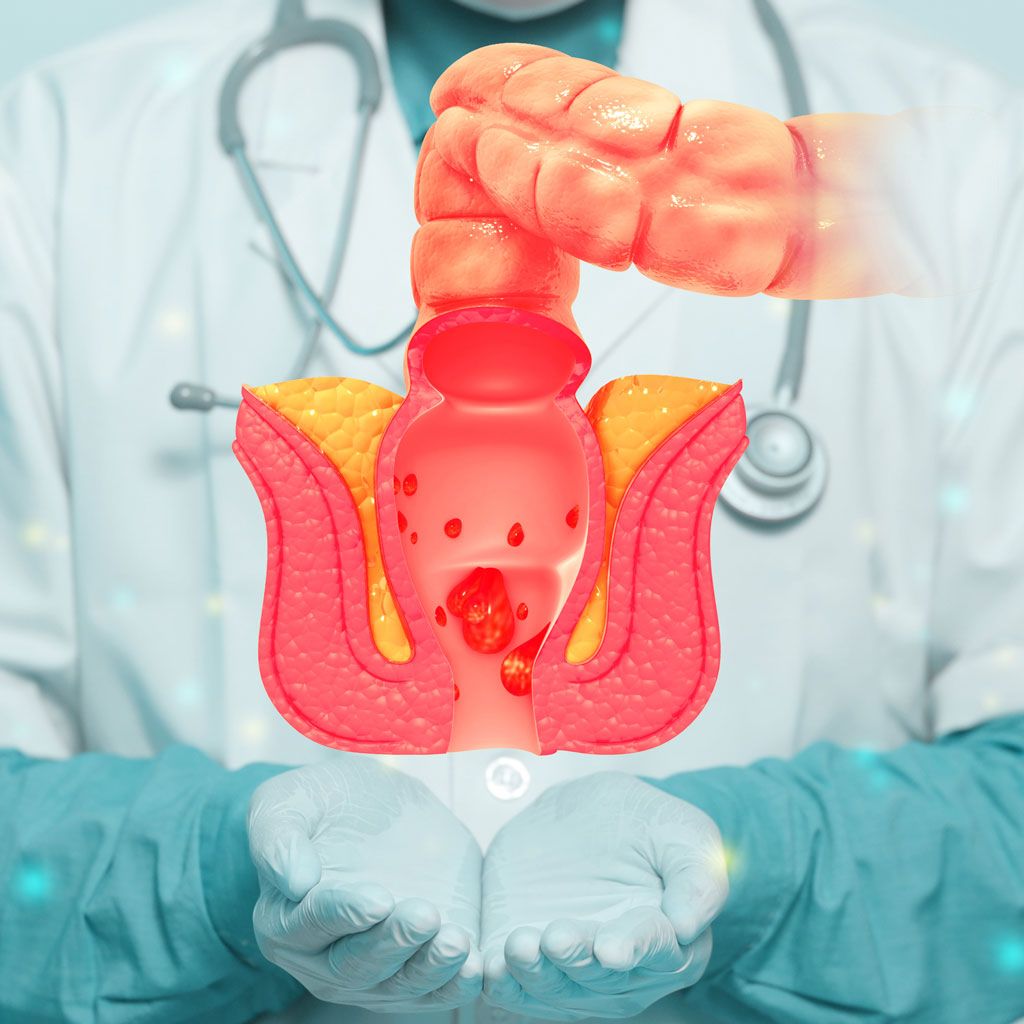
Is Hemorrhoid Artery Embolization right for you? Here’s what to know
June 24, 2026
Medically reviewed by Alex Kim, MD
If you’ve been struggling with pain, bleeding, and discomfort from chronic hemorrhoids, you already know how frustrating it can be to find a solution that works.
Creams, dietary changes, and procedures like rubber band ligation may offer temporary relief, but for many patients, symptoms keep coming back. Meanwhile, many choose to forgo hemorrhoid surgery, especially when considering the uncomfortable recovery timeline.
Because of this, Hemorrhoid Artery Embolization (HAE) is drawing a lot of attention as a hemorrhoid treatment without surgery. So, is it the right choice for you? Here’s an academic overview of how it works, who qualifies, what the data says, and what to expect if you decide on HAE.
What is Hemorrhoid Artery Embolization?
Hemorrhoid artery embolization is a minimally invasive, outpatient procedure designed to treat symptomatic internal hemorrhoids by reducing their blood supply. A highly trained interventional radiologist (a specialist who undergoes 14+ years of school!) inserts a small catheter into an artery via the wrist or groin. Then they guide the catheter through the arterial system until it reaches the rectal artery that feeds the hemorrhoidal tissue. Once there, tiny microcoils are released that block the abnormal blood flow, causing the hemorrhoids to shrink and symptoms to subside.1
The procedure typically takes an hour and is performed at an outpatient center, allowing patients to go home the same day. Patients are often surprised at how quick the entire process is and leave with nothing but a band-aid!
HAE vs. traditional surgery
Hemorrhoidectomy is the surgical procedure that often serves as treatment for severe hemorrhoids. The problem is it comes with significant tradeoffs: significant post-operation pain, a long recovery time, and risks like incontinence.
HAE was designed for patients with Grade 1-3 hemorrhoids who haven’t responded to conservative measures and offers a non-surgical path to relief. HAE is also a minimally invasive procedure that reports minimal recovery time and extremely low rates of risk.2
What does research say about HAE success rates?
A 2025 meta-analysis published in Frontiers in Surgery reported a mean technical success rate of 97.8%, with significant reductions in bleeding scores following the procedure.3 The same analysis found that clinical success rates ranged from 73-89%, with no reported cases of serious complications.
A large single-center study published in the Journal of Vascular and Interventional Radiology reinforces these findings. Among 134 patients who underwent HAE, embolization of at least one hemorrhoidal artery was achieved in 99% of cases, and clinical success was seen in 93% of patients at the one-month follow-up.4 Research from a 2024 review of 221 patients presented at the Society of Interventional Radiology’s Annual Scientific Meeting found a technical success rate of 100% and clinical success in 90% of patients at one month post-procedure.1
It’s worth noting that some patients experience recurrence of bleeding over time, with studies reporting recurrence in roughly 22.5% of patients during follow-up periods. In many of these cases, a repeat embolization is a viable option.3
Who is a candidate for HAE?
HAE isn’t a universal solution for everyone with hemorrhoids.
You may be a candidate if you experience the following:
- Have been diagnosed with grade II or III internal hemorrhoids.
- Continue to experience significant symptoms (particularly bleeding, pain, or prolapse) despite trying conservative treatments such as dietary modification, topical therapies, or rubber band ligation.
- Are seeking a minimally invasive alternative to surgery, either by preference or due to medical conditions that make surgery higher-risk.
- Do not have grade IV hemorrhoids, which generally require more definitive surgical intervention.
Patients who carry elevated surgical risk due to cardiovascular or other health conditions may find HAE to be a particularly appropriate option, as the procedure avoids general anesthesia and the stress of invasive surgery.
What does HAE recovery look like?
Recovery from HAE is generally a smooth process. Because the procedure does not involve surgical removal of tissue, most patients experience minimal post-procedure discomfort. Some may notice temporary pressure, the urge to pass stool, or the sensation of rectal fullness in the days following the procedure, all of which typically resolve on their own. Symptom improvement tends to develop gradually as the hemorrhoidal tissue shrinks, with many patients noticing meaningful relief within two to four weeks.2
What’s next?
For patients who have exhausted conservative options and want to avoid surgery, hemorrhoid artery embolization represents a scientifically supported, low-risk path forward. With hemorrhoid embolization success rates consistently reported between 73% and 93% across multiple peer-reviewed studies, the procedure has earned its place as a meaningful addition to the treatment landscape for internal hemorrhoid disease.3,4
Our physicians at National Vascular Physicians treat chronic hemorrhoids using minimally invasive techniques that address the root of the issue. If you’d like to learn more, or want us to get in touch with your doctor to discuss your specific case, please reach out to our team here.
Sources
- IR Quarterly / Society of Interventional Radiology. “Hemorrhoid artery embolization proves durable, effective for internal hemorrhoids.” March 2024. https://irq.sirweb.org/sirtoday/hemorrhoid-artery-embolization-aoy-3/
- Provectus Health. “Hemorrhoidal Artery Embolization (HAE).” https://provectus.health/hemorrhoidal-artery-embolization-hae/
- Panneau J, et al. “Hemorrhoidal disease: what role can rectal artery embolization play?” Frontiers in Surgery. January 7, 2025. https://pubmed.ncbi.nlm.nih.gov/39840267/
- Bagla S, et al. “Outcomes of Hemorrhoidal Artery Embolization from a Multidisciplinary Outpatient Interventional Center.” Journal of Vascular and Interventional Radiology. February 2023. https://www.jvir.org/article/S1051-0443(23)00112-4/abstract