

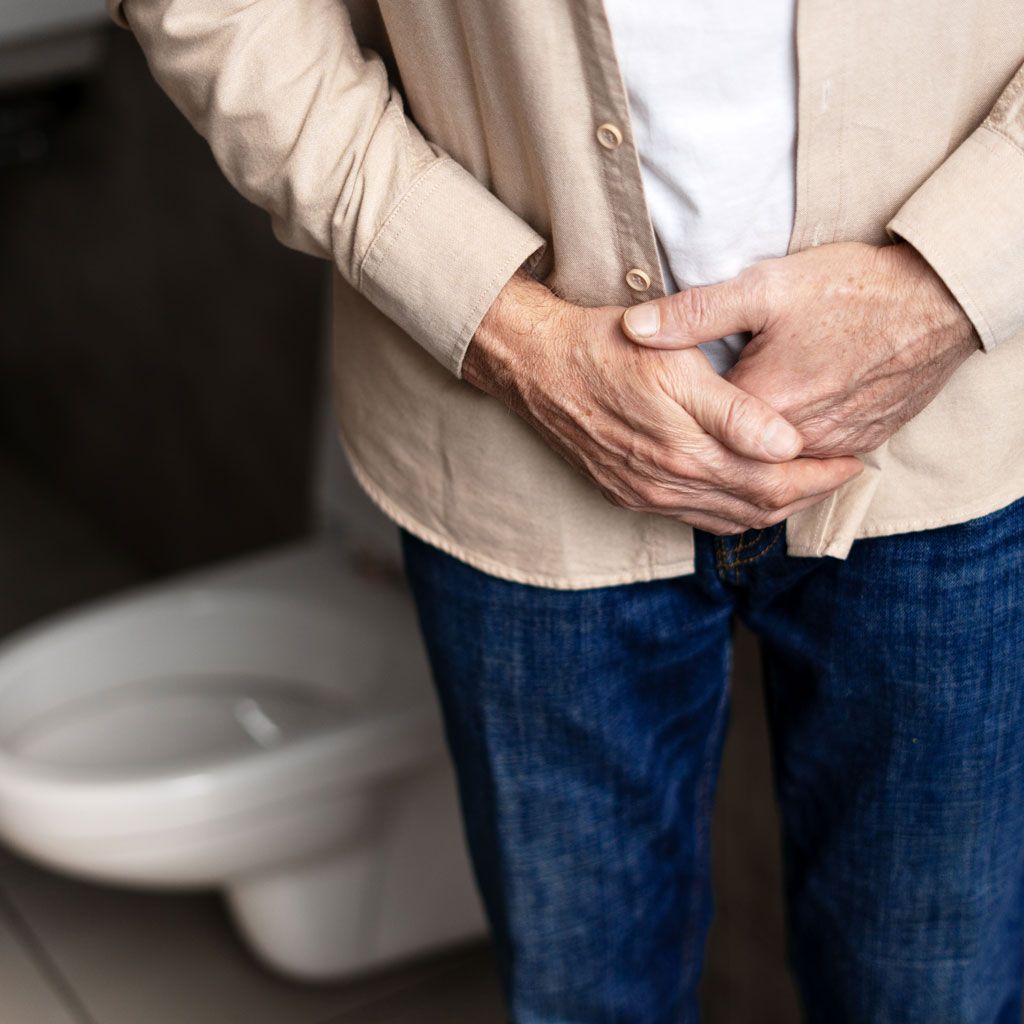
8 Signs Your Prostate Symptoms Are BPH, Not Just Aging
September 28, 2026
There’s often a long list of cricks, pains, and health problems to address as you get older, but don’t get fooled into thinking that urination issues belong in the same bag! If you’re peeing far more often than you used to, it takes a while to start urinating, or you feel like you’ve haven’t fully emptied your bladder, these are all signs of an enlarged prostate, or Benign Prostatic Hyperplasia (BPH).
Many men share these prostate symptoms as they age. In fact, it’s so common that BPH affects about 50-75% of men over 50.1,2 So how do you know for sure whether you have BPH, or your prostate symptoms are a sign of something else? Read on to discover several telltale signs that you may have an enlarged prostate.
1. You’re waking up two or more times a night to urinate
An occasional middle-of-the-night trip to the bathroom is normal. Doing it two, three, or four times a night has a name: nocturia. It’s one of the earliest and most common signs of BPH.3 Interrupted sleep can affect mood, blood pressure, and how alert you feel the next day.
2. Your stream isn’t what it used to be
You may notice that your flow has become weaker and slower to start. This weak stream can stem from an enlarged prostate. The abnormal blood flow feeding the prostate increases its size, and then pushes on the urethra, making it so less urine comes out.
3. There’s a delay before urination starts
Hesitancy, a noticeable pause between the intention to go and the stream actually starting, is a common obstructive symptom of BPH. This also stems from the larger, fuller prostate pressing on the urethra.
4. You feel like you never fully empty your bladder
Stepping away from the bathroom and still feeling some fullness or pressure is known as incomplete emptying. It’s worth noting, since over time it can contribute to urinary tract infections or added strain on the bladder.
5. Sudden urgency, with little warning
This tends to show up later, once the bladder has been compensating for a while. There’s no building sense, just a sudden urge to go.
6. You’re stopping and starting mid-stream
The flow pauses and restarts, sometimes more than once in a single trip. This is called intermittency, and like the prostate symptoms above, it’s typically tied to a narrowed urethra rather than age on its own.
7. You’re straining to get things going
Needing to bear down to start or maintain the stream means the bladder is doing extra work it shouldn’t have to.
8. It’s started to shape how you plan your day
Have you ever planned your route around bathroom stops? Or unable to finish 9 holes without going? If so, it’s time to talk to a physician.
So, how do you treat BPH?
For a long time, treatment for BPH came down to two choices: medication, or surgery. Medications can lose effectiveness over time or come with their own side effects. Traditional surgery, such as TURP, involves real recovery time and real risks, including possible sexual side effects.
Prostate artery embolization (PAE) is another option worth knowing about. It’s a non-surgical, image-guided treatment performed by an interventional radiologist rather than in a traditional operating room. Through a small puncture in the wrist or groin, a physician guides a catheter to the arteries supplying the prostate and delivers tiny particles that reduce blood flow to the enlarged tissue.4 Over time, that tissue can shrink, which may ease pressure on the urethra and improve prostate symptoms.
A few things worth knowing about PAE:
No incision and no general anesthesia
Typically done on an outpatient basis
Associated with a lower rate of sexual side effects compared with traditional surgery5
As with any procedure, individual results and candidacy vary, and it isn’t the right fit for everyone.
Learn more about PAE
If you’re looking for a solution to BPH and want a proven, non-surgical solution, reach out to National Vascular Physicians. Our physicians are some of the most experienced in the region and have been performing this procedure for decades. You can schedule a conversation with them at (301) 276-5670.
References
- Mo Y, et al. Tracking and analysis of benign prostatic hyperplasia and prostate cancer burden globally: 1990–2021 epidemiological trends. Translational Andrology and Urology, 2025.
- Ng M, Baradhi KM. Benign Prostatic Hyperplasia. StatPearls, National Library of Medicine, updated 2024. (Prevalence exceeding 50% of men aged 60 and approaching 90% of men over 70.)
- Xue Z, Lin Y, Jiang Y, Wei N, Bi J. The evaluation of nocturia in patients with lower urinary tract symptoms suggestive of benign prostatic hyperplasia. BMC Urology, 2018;18:117.
- Malling B, et al. Prostatic Artery Embolization for Benign Prostatic Hyperplasia: Patient Evaluation, Anatomy, and Technique for Successful Treatment. RadioGraphics, 2019;39(6):1526-1548.
- de Assis AM, et al. Prostatic Artery Embolization and Sexual Function: Literature Review and Comparison to Other Urologic Interventions. ScienceDirect, 2020.